
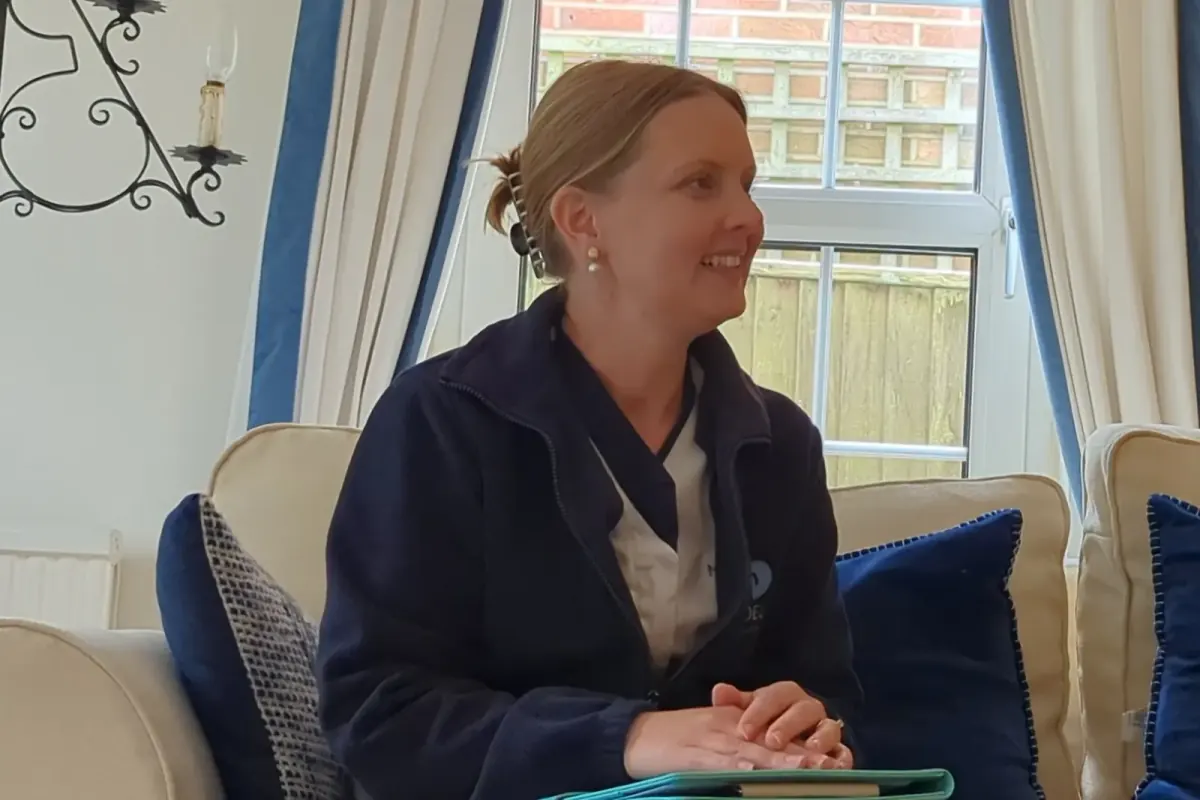
Post-Surgery Rehabilitation
Spinal Surgery Rehab at Home
Our HCPC-registered physiotherapists and occupational therapists provide specialist spinal surgery rehab at home across Hampshire, Dorset and the edge of Wiltshire.
You'll usually speak to Naomi, our Clinical Director, or another senior therapist. If we're with a patient, please leave a voicemail and we'll call you back.
No waiting list. First home visit usually within 2–7 days, often within 48 hours, depending on your location and therapist availability.
-
From £60 a visit Initial assessment £120 · no GP referral needed. See all prices
-
HCPC-registered CSP & RCOT members · DBS-checked
-
Home visits across Hampshire, Dorset and the edge of Wiltshire
How Our Team Helps After Spinal Surgery
By combining physiotherapy (movement and strength) with occupational therapy (daily living and home safety), we deliver a complete rehabilitation programme — not just exercises.
Recovering from back surgery can feel daunting. Whether you have had a decompression, discectomy, or spinal fusion, the thought of moving again at home is often accompanied by anxiety about pain and protecting the surgical site.
Physiotherapy: Movement & Strength
- Log-Rolling & Safe Transfers
- Core Stability Training
- Gait Re-education
- Neural Mobilisation
Physiotherapy in detail
Our physiotherapists focus on the physical mechanics of your spinal recovery — restoring safe movement, rebuilding core strength, and helping you regain confidence in your body.
- Log-Rolling & Safe Transfers — Teaching you the correct way to get in and out of bed without twisting, and how to move between sitting and standing safely, protecting the surgical site during critical early weeks.
- Core Stability Training — Guided activation of deep abdominal muscles to build the "internal corset" that supports your spine, progressing exercises gradually as healing allows.
- Gait Re-education — Correcting walking patterns that may have developed from months of pre-operative pain, practising on your own floors and stairs, not a clinic corridor.
- Neural Mobilisation — Gentle techniques to help nerves glide freely and reduce residual tingling or sensitivity, recognising that nerves heal more slowly than muscle or bone.
Occupational Therapy: Daily Living & Safety
- Personal Care Within Restrictions
- Home Safety Assessment
- Energy Conservation & Pacing
- Sleep Positioning
Occupational therapy in detail
Our occupational therapists focus on the practical challenges of daily life while you're recovering — ensuring you can manage personal care, move safely around the home, and maintain your independence within your surgical restrictions.
- Personal Care Within Restrictions — Techniques to wash and dress your lower body, keeping you independent without compromising your recovery.
- Home Safety Assessment — Identifying trip hazards, furniture that is too low, and areas where you may need adaptations in your bedroom, bathroom, and kitchen (see our home adaptations service).
- Energy Conservation & Pacing — Strategies to pace your day so you have enough energy for what matters, managing post-surgical fatigue without exhausting yourself and setting back your recovery.
- Sleep Positioning — Advice on pillow placement and sleeping postures to keep the spine neutral at night, practical guidance that can transform your sleep quality.
From People We've Helped After Surgery
Google reviews from people we have helped at home after different kinds of surgery, not only spinal surgery. Read all our 5-star Google reviews.
“Had a major worry post op I wouldn't be able to cope to do the physio myself, I called Medella and had a lovely phone welcoming me with them and was allocated Jo. … I'm on the 3rd visit this week and where I dreaded it, now I look forward to it. …”
Meet Our Spinal Rehabilitation Team
Our team averages 21+ years of clinical experience. No junior staff. View all team profiles.
-

Naomi Patrick
Clinical Director & Senior Physiotherapist
-

Julia Pervin
Senior Physiotherapist
-

Kate Griffiths
Senior Occupational Therapist
-

Seena Thomas
Senior Physiotherapist
-

Sarah Grisenthwaite
Senior Physiotherapist
-

Lucy Chaldecott
Senior Physiotherapist
Show all 16 clinicians Show fewer clinicians
-

Libby Jarman
Senior Physiotherapist
-

Leah Burch
Senior Physiotherapist
-

Jo Howard
Senior Occupational Therapist
-

Jo Hardcastle
Senior Physiotherapist
-

Helena Drummond
Senior Physiotherapist
-

Heidi Hanslip
Senior Occupational Therapist
-

Catherine Case
Senior Physiotherapist
-

Bex Marsh
Senior Physiotherapist
-

Andrea McKee
Senior Physiotherapist
-

Samantha Densem
Senior Physiotherapist
When to Seek Immediate Medical Attention
While some discomfort is expected during recovery, new symptoms need medical assessment. Go to A&E immediately for new difficulty starting or passing urine, inability to pass urine, loss of bladder or bowel control, or numbness around your genitals or back passage. These can be signs of cauda equina syndrome. Do not wait for a routine surgeon reply or therapy visit; call 999 if you cannot get to emergency care safely.
Contact your surgical team urgently for the symptoms below. If they cannot respond promptly, contact NHS 111:
- New or worsening leg symptoms: Pain, weakness, or numbness that is new or getting worse
- Foot drop: Sudden inability to lift your foot or toes
- Signs of infection: Fever, shaking, or the wound becoming hot, red, or leaking fluid
- Escalating pain: Pain that is worsening significantly despite medication
Read the NHS advice after lumbar decompression and NHS guidance on spinal warning symptoms.
Spinal Surgery Rehab Home Visit Pricing
Your initial assessment includes a full review of your surgical notes, a physical and functional evaluation, and a personalised rehabilitation plan. No contracts or minimum commitments.
- Initial assessment usually 60–90 minutes
- £120
- 30-minute follow-up
- £60
- 45-minute follow-up
- £90
Your Recovery Timeline
Spinal surgery is not one procedure — it covers a range of operations, each with its own recovery demands. Your rehabilitation depends heavily on what was done and how your body responds. Follow your surgical team's plan for movement at home and ask for help if you are unsure how to progress.
Every recovery is individual, but most spinal surgery patients move through three broad phases. For fusion patients, timelines may be extended.
-
Protection and safety
The priority is protecting the surgery and managing pain. We focus on safe transfers (getting in and out of bed and chairs), walking little and often, and strictly adhering to your surgeon's restrictions. Follow any limits on bending, lifting or twisting given by your own surgical team. We teach you how to wash, dress, and move around the home within these limits.
-
Building movement
Once initial healing has occurred, we introduce gentle core activation and postural re-education. This phase is about building the "internal corset" of deep muscle to support your spine as you carefully increase activity levels.
-
Everyday activities and strength
A steady return to normal activities, hobbies, and potentially driving. The goal is to build resilience so you can move with confidence and without fear of re-injury. For fusion patients, this phase may begin later and progress more gradually.
Frequently Asked Questions
When should I start physiotherapy after spinal surgery?
Start with the exercise and mobility plan your hospital team gives you, following its timing and any restrictions. Early movement helps recovery, but there is no single deadline after which improvement becomes impossible. Contact us before you leave hospital if possible to discuss a suitable first visit. First home visits are usually available within 2–7 days, depending on your location and therapist availability.
When can I drive after spinal surgery?
Before driving, follow your surgeon’s advice and any DVLA requirements, and check with your insurer. You must be able to control the car safely, without pain or medicines affecting your driving. Your therapist can help you prepare; an emergency stop alone does not establish fitness to drive.
Why does my leg still hurt after decompression surgery?
Leg pain or altered sensation can take time to improve after decompression surgery, and some symptoms may persist. Your surgical team can advise on what to expect in your case. A physiotherapist can assess how symptoms affect movement and suggest suitable exercises within your postoperative plan to support movement and symptom management as you recover.
Contact your surgical team or NHS 111 promptly for new or worsening leg pain, weakness or numbness. New difficulty passing urine, loss of bladder or bowel control, or numbness around the genitals or back passage needs emergency assessment at A&E. Do not wait for a routine therapy visit. See the NHS information on lumbar decompression surgery.
Do I have to sleep on my back after spinal surgery?
Not necessarily. We can teach you how to sleep on your side safely using pillows between your knees to keep the spine in a neutral position. Finding a comfortable sleeping position is one of the most common challenges after spinal surgery, and practical positioning advice from an OT can make a significant difference.
Which areas do you cover?
We provide home visits across Hampshire, Dorset and the edge of Wiltshire. This includes Southampton, Bournemouth, Poole, Ringwood, and the surrounding towns and villages. Salisbury is not covered at present; we are recruiting a therapist for the area.
Background reading
What to Expect
-
Initial assessment at home
First home visits are usually available within 2–7 days, depending on your location and therapist availability. During your assessment (usually 60–90 minutes), we review your surgical notes and discharge letter, check wound healing, assess your mobility, and evaluate your home environment for safety.
-
Surgery-specific rehabilitation plan
Based on your specific procedure, your consultant's protocol, and your personal goals, we create a clear plan with measurable milestones and exercises tailored to your recovery.
-
Regular sessions
Typically one to two sessions per week, progressing exercises as your strength and confidence improve. We communicate directly with your consultant or GP if there are concerns about your progress.
-
Return to independence
Our goal is to get you moving confidently again — managing stairs, returning to hobbies, and eventually driving. We build resilience so you can move without fear of re-injury.
Understanding Spinal Surgery Recovery
Whatever the procedure, returning home can bring questions about how to manage daily tasks safely. Our therapists can build on the advice from your hospital team — visiting you at home to provide expert, hands-on rehabilitation tailored to your specific surgery.
Decompression (Laminectomy). Often allows quicker mobilisation. The focus is on relieving nerve pressure and rebuilding core stability to support the spine.
Discectomy. Removal of disc material to relieve pain. Rehabilitation may include exercises and movement advice to support recovery, following your surgical team's plan.
Spinal Fusion. A more complex recovery with strict protocols while the bones fuse. Rehabilitation is slower but essential for a good long-term outcome.
Cervical (Neck) Surgery. Requires specific focus on posture, head positioning, and upper limb function alongside general spinal rehabilitation.
Practical Equipment for Spinal Recovery
Small adaptations can make a significant difference to your independence while you adhere to surgical restrictions. Our OTs assess what you actually need and help you avoid buying equipment that is unnecessary.
Grabbers & Reachers
Essential for picking up items from the floor without bending.
Sock Aids & Long-handled Sponges
For independent dressing and washing within your surgeon's restrictions.
Raised Toilet Seat
Makes standing up from the toilet safer and easier without spinal flexion.
Bed Lever
A rail that slides under the mattress to assist with log-rolling and standing from bed.
Why Home-Based Rehab After Spinal Surgery
We bridge the gap between hospital discharge and full independence — ensuring you recover safely without the discomfort of travelling to a clinic.
Travelling to a clinic with a healing spine can be painful and tiring. The car journey alone can use up the energy you need for your exercises, and sitting in a waiting room on a hard chair is the last thing your back needs.
By visiting you at home, we save your energy for what matters: your recovery. We practise the movements you actually need — getting in and out of your bed, managing your bathroom, sitting comfortably in your armchair. Our OT checks whether your furniture heights, mattress support, and sleeping arrangements are helping or hindering your recovery.
Family members can also observe techniques and learn how to help safely between sessions.
Information from Medella Home Physio & OT. Clinical director: Naomi Patrick. Last updated .
Start Your Spinal Recovery at Home
Contact us to discuss a specialist post-operative assessment at home, alongside any rehabilitation already arranged.
If we're with a patient, please leave a voicemail and we'll call you back.
Mon-Sun, 8am-8pm