
Knee Replacement Rehab at Home
After a total knee replacement (TKR) or partial knee replacement (PKR), following your hospital's exercise plan early in recovery helps you rebuild movement and strength. Recovery continues over months and varies from person to person. If you are struggling with the exercises or your movement is not improving, ask your surgical or therapy team for advice — additional support may help at different stages of recovery.
Our HCPC-registered physiotherapists and occupational therapists deliver specialist knee replacement rehab at home across Hampshire, Dorset and Wiltshire. We help you bend, straighten, strengthen, and walk confidently — all practised on your own floors, stairs, and in your own bathroom.
No waiting list. First home visit usually within 2–7 days, often within 48 hours, depending on your location and therapist availability.
- Home visits across Hampshire, Dorset & Wiltshire
- From £60 a visit · initial assessment £120 · no GP referral needed
- Rated 5★ on Google from 31 reviews
- You'll usually speak to Naomi, our Clinical Director, or another senior therapist.
If we're with a patient, please leave a voicemail and we'll call you back. See all prices
Understanding Knee Replacement Recovery
Knee replacement surgery removes damaged cartilage and bone, replacing them with metal and plastic components. The operation itself is highly successful, but the artificial joint will only perform well if the surrounding muscles are strong and the knee can bend and straighten through a functional range.
In the days after surgery, it is completely normal to experience:
- Swelling and warmth — the knee typically remains swollen for weeks to months, gradually reducing with elevation and ice.
- Stiffness — regular movement and your prescribed exercises help improve knee movement. Scar tissue is part of healing; persistent or worsening stiffness needs assessment so your rehabilitation can be adjusted.
- Bruising — extensive bruising down the shin and thigh is common and resolves over several weeks.
- Muscle weakness — the quadriceps (thigh muscles) will have weakened before and during surgery. Rebuilding them is central to your recovery.
Recovery is not passive. Having a specialist physio visit you at home ensures you are doing the right exercises, at the right intensity, at every stage of your healing.
Your Knee Replacement Recovery Timeline
Every person recovers at a different pace, but this is a typical progression we guide our patients through. We adjust your plan based on how your knee responds.
Weeks 1–2: Pain Management & Early Mobility
- • Managing swelling with ice, elevation, and compression
- • Achieving full knee extension (straightening) — this is the top priority
- • Gentle flexion (bending) exercises, aiming for 70–90°
- • Safe mobilisation with crutches or a frame around your home
- • Wound monitoring and care advice
Weeks 3–6: Building Strength & Flexion
- • Progressive flexion work, aiming for 100–110° by week 6
- • Quadriceps and hamstring strengthening exercises
- • Stair practice on your own staircase
- • Beginning to reduce reliance on walking aids
- • Light household tasks and short outdoor walks
Weeks 7–12: Independence & Confidence
- • Walking without aids for most patients
- • Longer walks and outdoor confidence building
- • Return to driving (typically around 6–8 weeks, subject to consultant approval)
- • Functional strength for gardening, shopping, and social activities
- • Swelling continuing to reduce
3–12 Months: Full Recovery
- • Residual swelling settles (can take up to 12 months)
- • Return to hobbies: swimming, golf, cycling, bowls
- • Maximum range of movement typically achieved by 3–6 months
- • Ongoing strength maintenance programme
- • Discharge when you are confident and independent
How Our Team Helps After Knee Replacement
By combining physiotherapy (movement and strength) with occupational therapy (daily living and home safety), we deliver a complete rehabilitation programme — not just exercises.
Physiotherapy: Restoring Movement & Strength
Knee replacement physiotherapy home visits focus on turning your new joint into a fully functional knee. Because we work in your home, every exercise has a direct, practical purpose.
- Range of movement — targeted exercises, with stretching or hands-on treatment where appropriate, to improve straightening and bending. Your programme is adjusted as your movement and function change
- Muscle reconditioning — progressive strengthening of the quadriceps, hamstrings, and calf muscles using your body weight and simple equipment
- Gait re-education — correcting your walking pattern on your own carpets, tiles, and garden paths so you walk naturally and confidently
- Stair training — practising on your staircase, teaching safe technique and building the strength to go up and down without fear
- Scar management — advice on caring for a healed scar and managing sensitivity or tightness. Massage is only considered once the wound has fully healed and your surgical team advises it is appropriate
Occupational Therapy: Daily Life & Home Safety
While physiotherapy focuses on the knee itself, occupational therapy focuses on you living with it — managing daily life safely and independently throughout your recovery.
- Home safety assessment — checking for trip hazards and obstacles in your bathroom, bedroom, and kitchen where most accidents happen during recovery
- Equipment prescriptions — raised toilet seats, perching stools, bed levers, and specialist seating to make daily living easier immediately
- Daily living techniques — safe methods for putting on socks, getting into the shower, and sitting on low furniture without straining your new joint
- Return to routine — a graded plan to get you back to preparing meals, hobbies, and social activities with realistic milestones
- Carer training — helping family members feel confident supporting you between visits. See our carer training service
Is Rehab at Home Right for You?
Driving to an outpatient clinic with a fresh knee replacement is painful, tiring, and often impossible in the early weeks. The energy you use getting there is energy you need for your exercises.
When we come to your home, we practise the things you actually need to do: climbing your stairs, getting in and out of your bed, sitting in your armchair. This functional, real-world approach means every exercise has an immediate, practical purpose. If you can travel comfortably, an outpatient clinic may suit you too, and we'll tell you honestly if home visits aren't the best fit.
Family members can also watch, learn, and ask questions, giving them the confidence to support you safely between sessions.
What to Expect from Your First Visit
You do not need a GP referral. Contact us before the surgery date where possible so we can plan a suitable first visit after discharge. First home visits are usually available within 2–7 days, depending on your location and therapist availability.
Initial phone discussion
We learn about your surgery type, discharge date, home setup, and any concerns. We match you with the right therapist for your needs.
Assessment at home (usually 60–90 minutes)
Your therapist reviews your surgical notes, assesses swelling, range of movement, pain levels, and checks your home for safety. We also speak with family members if they are present.
Personalised rehabilitation plan
A clear programme with measurable goals based on your surgery, your consultant's protocol, and your personal targets. No generic exercise sheets.
Regular sessions
Most patients benefit from two sessions per week initially, reducing as strength and range improve. There are no contracts — you can adjust frequency at any time.
When to Get Medical Help
Some discomfort is expected during recovery, but new or worsening symptoms may need medical assessment.
Call 999 or go to A&E
Get emergency help for chest or upper-back pain, severe breathing difficulty, a very fast heartbeat, or collapse. Leg pain and swelling together with breathlessness or chest pain also need emergency help: this could be a blood clot in the lungs. Do not drive yourself to A&E.
Get urgent advice from your GP, surgical team or NHS 111
Seek urgent advice for the symptoms below. If your surgical team cannot respond promptly, contact NHS 111; do not wait for your next rehabilitation visit.
- Redness, heat, or fluid leaking from the wound site
- New breathlessness without the emergency symptoms above
- Calf pain that is hot to the touch — potential sign of DVT (deep vein thrombosis)
- A sudden inability to put weight on the operated leg
- A high temperature, or feeling hot and shivery
Read the NHS advice on knee replacement complications and blood clots in the lungs.
From People We've Helped After Surgery
Google reviews from people we have helped at home after different kinds of surgery, not only knee replacement. Read all our 5-star Google reviews.
"My elderly Mother was given a Physiotherapy Assessment by Catherine Case of Medella Home Physio & OT following a series of falls at home. Catherine was immediately able to diagnose the source of my Mother's pain and vulnerability as being a worn out hip. Whilst waiting for Hip Surgery, Catherine reduced my Mother's pain levels and increased her mobility with regular Physiotherapy Exercises, showing excellent communication and motivation skills. Catherine made a huge improvement to the quality of my Mother's Life during her last 18 months and I cannot thank her enough. Also big thank you to Naomi at MEDELLA for organizing everything so efficiently."
Jeremy Wilkinson
Google Review
"We had Seena help my 91 year old mum recover from a hip replacement operation last year. Seena was excellent at encouraging my mum to do all the appropriate exercises and getting her confidence back after her fall. We have been very pleased with the results. We have been using Seena on a weekly basis for 10 months as we see the benefit she is giving to my mum. She would not be as strong on her feet if we did not have Seena helping us. Thank you Seena."
Carole Richmond
Google Review
"Jo was excellent in supporting my 99 year old dad after he suffered a hip fracture. She supported him to get mobile and provided exercises to help him regain muscle strength. Lots of incredibly helpful suggestions and an extremely positive and encouraging therapist — we are extremely grateful!"
Annie Jenkinson
Google Review
Knee Replacement Home Visit Pricing
Knee replacement physiotherapy and occupational therapy from £60 per home visit. Your initial assessment (£120, usually 60–90 minutes) includes a full physical evaluation, review of your surgical protocol, and a personalised rehabilitation plan.
There are no contracts or minimum commitments. Most families start with twice-weekly sessions in the early weeks, then reduce as strength and confidence build. We invoice monthly in arrears with no upfront payment.
£120
Initial Assessment
usually 60–90 minutes
£60
30-min Follow-up
30 minutes
£90
45-min Follow-up
45 minutes
Your Knee Rehabilitation Specialists
Our team averages 21+ years of clinical experience. Every therapist is a senior clinician — no junior staff. View all team profiles.
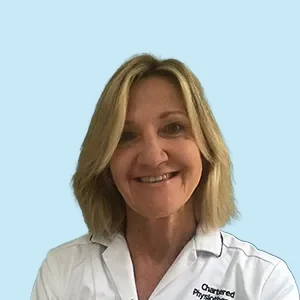
Julia Pervin
Senior Physiotherapist
Physiotherapy
Seena Thomas
Senior Physiotherapist
Physiotherapy
Lucy Chaldecott
Senior Physiotherapist
Physiotherapy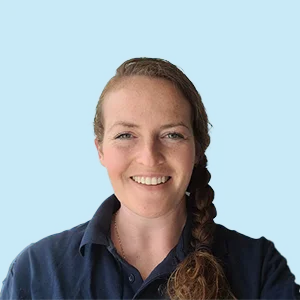
Leah Burch
Senior Physiotherapist
Physiotherapy
Jo Hardcastle
Senior Physiotherapist
Physiotherapy
Kate Griffiths
Senior Occupational Therapist
Occupational TherapyRecovery Stories After Other Operations and Injuries
Recovery After 17 Fractures
Following a coma and severe road accident, this 55-year-old client wanted to get back to nature. Read about his journey back to driving and fishing.
Read Full StoryGetting Back Behind the Wheel
A woman living alone lost her confidence to drive after a hip fracture. Our OT broke driving down into manageable steps, rebuilding her skills until she was back picking up her grandchildren.
Read Full StoryFrequently Asked Questions
When should I start physiotherapy after knee replacement?
Start with the exercise and mobility plan your hospital team gives you, following its timing and precautions. Early movement helps recovery, but there is no single deadline after which improvement becomes impossible. Recovery continues over months.
Some people manage well with their prescribed exercises and access to advice; others need supervised support for exercises or daily activities. If you are struggling, or your movement is not improving, contact your surgical or therapy team. We can discuss extra home support before your operation or at any stage afterwards. See the NHS guide to knee replacement recovery.
How often will I need sessions?
Most patients benefit from two sessions per week in the early stages (weeks 1-6), reducing to once per week as strength and range improve. Some people prefer more intensive input initially. There are no contracts — you can increase, decrease, or stop sessions at any point.
When can I drive again after knee replacement?
Most surgeons advise waiting at least 6 weeks after surgery, and only once you can perform an emergency stop safely. For left knee replacements in an automatic car, this may be sooner. Your therapist can assess your readiness and advise when it is safe to begin driving again. You should also check with your insurance provider.
What equipment will I need at home?
Common items include a raised toilet seat, a perching stool for the kitchen, a bed lever, and ice packs. Some patients also benefit from a long-handled shoe horn and a sock aid. Our OTs assess your specific needs during the initial visit and can recommend and source temporary equipment quickly. Most items are only needed for the first few weeks.
Can you visit me in a care home during respite?
Yes. Many patients spend a few weeks in a residential or nursing home for convalescence after surgery. We can visit you there to support your rehabilitation, working alongside the care home staff. First home visits are usually available within 2–7 days, depending on your location and therapist availability. Once you return home, we can continue your programme in your own environment.
Which areas do you cover?
We provide home visits across Hampshire, Dorset, and Wiltshire. This includes Southampton, Bournemouth, Poole, Salisbury, Ringwood, and the surrounding towns and villages.
Start Your Knee Recovery at Home
If you are waiting for NHS rehabilitation or would like additional support, contact us to discuss your first home visit. First home visits are usually available within 2–7 days, depending on your location and therapist availability. We can coordinate with your existing team with your permission.