
Staying mobile is the key to maintaining independence and quality of life as we age. The ability to move freely allows us to perform daily tasks with confidence, from making a cup of tea to walking down the garden path. This guide offers simple, safe, and effective home physiotherapy exercises designed to improve your strength, balance, and overall mobility.
Key Takeaways
- Consistency is key: Gentle, daily movement is more effective than occasional intense exercise.
- Safety first: Always have a stable support nearby (like a kitchen worktop) when exercising.
- Functional benefits: These exercises directly improve your ability to walk, stand, and balance at home.
In This Article
Why is Mobility So Important?
Good mobility makes everyday life easier and safer. When your joints are flexible and your muscles are strong, you can get out of a chair, climb stairs, and walk to the shops with greater ease. Importantly, improving your strength and balance significantly reduces the risk of falls, giving you and your family valuable peace of mind.
As we age, we naturally lose muscle mass (sarcopenia), but it is never too late to start reversing this process. Even small, regular movements can lead to significant improvements in your independence.
Safety Checklist Before You Start
Before beginning any new exercise programme, please ensure you follow these safety guidelines:
- Clear the area: Ensure you have plenty of space and there are no trip hazards (like rugs or cables).
- Use support: Have a sturdy chair, kitchen worktop, or heavy table nearby to hold onto.
- Listen to your body: A little muscle effort is good, but sharp pain is not. Stop if you feel unwell or dizzy.
- Clothing: Wear comfortable clothes and supportive footwear (no slippery socks).
Simple and Safe At-Home Mobility Exercises
Clinical Note: The following exercises are for general guidance. Please consult with a qualified physiotherapist to ensure they are appropriate for your specific medical history.
1. Marching on the Spot
Technique: Standing tall near a stable surface (lightly holding on if needed), slowly lift one knee up as if you are marching. Lower it with control and then lift the other. Keep your back straight and look forward, not at your feet.
Why do this? This improves hip flexibility and single-leg balance, which is vital for walking safely.
Reps & Sets: March for 30 seconds, rest, and repeat 3 times.
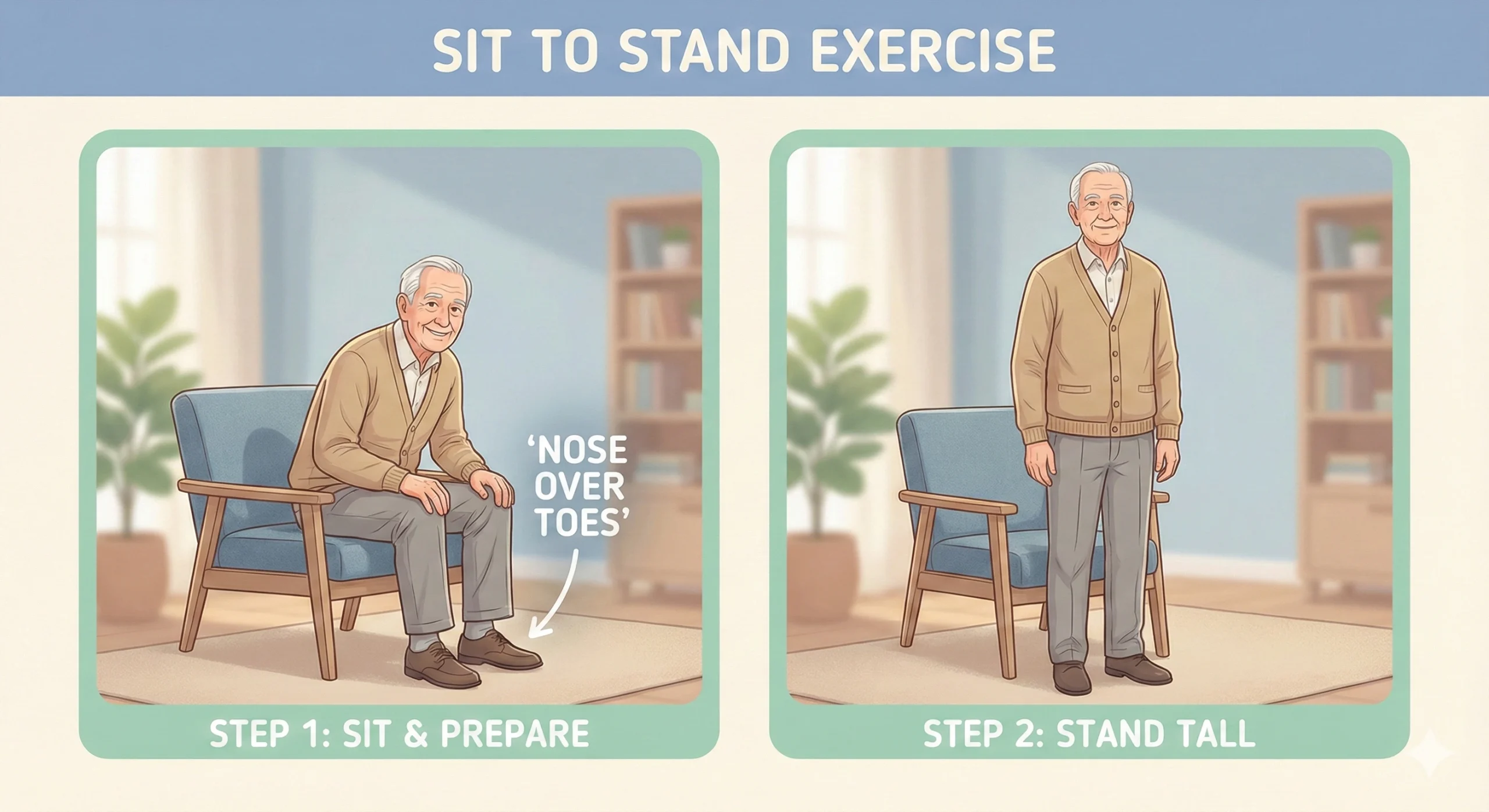
2. Sit to Stand
Technique: Sit on the edge of a sturdy chair (without wheels). Feet flat on the floor, hip-width apart. Lean forward slightly ("nose over toes") and push through your heels to stand up fully. Slowly lower yourself back down.
Why do this? This builds thigh power, essential for getting out of cars, armchairs, and off the toilet independently.
Reps & Sets: Aim for 8–10 repetitions, 2 sets.
3. Side Leg Lifts
Technique: Holding a kitchen worktop for support, stand tall. Slowly lift one leg out to the side. Keep your toes pointing forward (do not rotate the foot). Hold for a second, then lower slowly.
Why do this? This strengthens the glute muscles (hips), which stabilise your pelvis and prevent waddling or stumbling.
Reps & Sets: Aim for 8–12 reps on each leg, 2 sets.
4. Heel Raises
Technique: Stand tall holding your support. Push up onto your tiptoes, lifting your heels as high as comfortable. Hold for a moment, then lower slowly.
Why do this? This strengthens the calves and ankles, helping with balance and your ability to climb stairs.
Reps & Sets: Aim for 10–15 reps, 2 sets.
Frequently Asked Questions
How often should an older adult exercise?
Ideally, try to do some form of light movement every day. Strength and balance exercises, like the ones listed above, are best performed 2–3 times a week to allow muscles to recover and strengthen.
Is it safe to exercise if I have arthritis?
Yes, gentle movement is actually beneficial for arthritis as it lubricates the joints and strengthens the muscles supporting them. However, avoid exercising during an acute "flare-up" of pain. If in doubt, speak to a physiotherapist.
The information in this article is for educational purposes only. It does not replace a personalised assessment. If you are struggling with mobility, our Occupational Therapy and Physiotherapy teams can provide a tailored home rehabilitation plan.
Moving Forward with Confidence
Consistency is the secret to success. By incorporating these gentle exercises into your daily routine, you are taking a positive step towards maintaining your independence at home. If you or a loved one are finding these movements difficult, or if you feel unsteady, getting professional support can make a world of difference.
At Medella, we specialise in helping older adults stay active in their own homes. Contact our friendly team today to book a free initial phone consultation.