
Waiting for a community physiotherapy appointment can be frustrating and worrying. With current data showing significant delays across Hampshire, many older adults are left unsure of how to cope in the meantime. This guide explains the reality of the waiting lists and, most importantly, provides actionable steps to protect your mobility while you wait.
Updated on 29 November 2025
Key Takeaways
- Official data confirms over 22,000 people are currently waiting for community physio in our region.
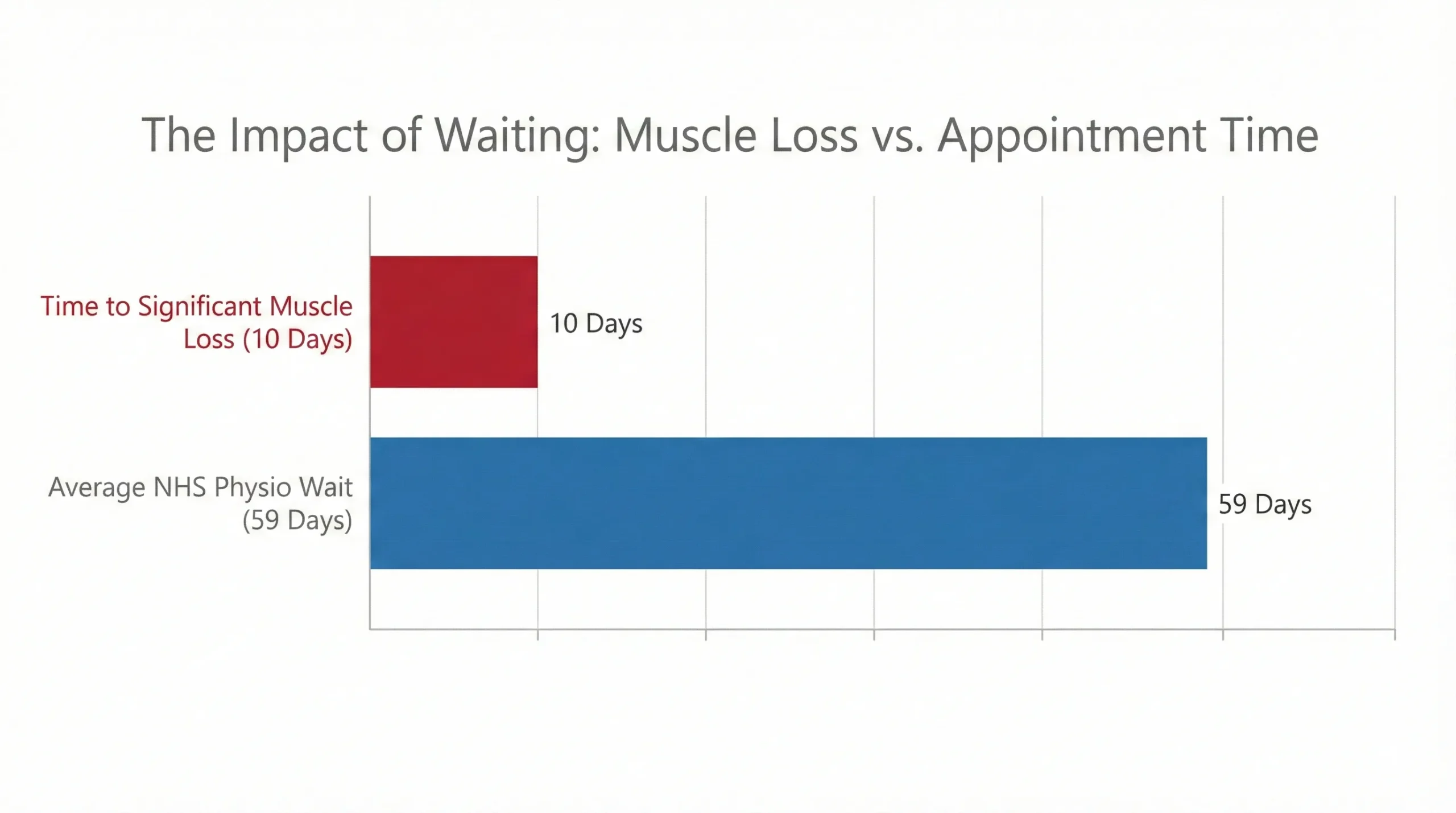
- The average wait is over 8 weeks, yet muscle strength can decline significantly in just 10 days of inactivity.
- You have options: private physiotherapy can "bridge the gap" to ensure rehabilitation starts immediately.
In This Article
The Reality of NHS Waiting Times in 2025
Recent Freedom of Information (FOI) data from the Hampshire & Isle of Wight Integrated Care Board (ICB) reveals the scale of the pressure on local services. As of April 2025, there are 22,863 patients on the waiting list for community physiotherapy.
The average wait time for a first assessment is 8.42 weeks (approximately 59 days). However, this is an average; in high-demand areas or for non-urgent cases, the wait can often extend to 12 weeks or more. While NHS staff work tirelessly, these systemic delays create a difficult gap for patients recovering from a fall, surgery, or illness.
The "Deconditioning" Risk: Why Speed Matters
Waiting two months might sound manageable, but for older adults, the biological clock ticks faster. "Deconditioning"—the physical decline caused by inactivity—is the real enemy here.
- The 10-Day Rule: Research from NHS England indicates that just 10 days of bed rest or low activity can age the muscles of an older adult by 10 years.
- The Confidence Drop: Often, the loss of confidence is more debilitating than the loss of strength. A fear of falling can lead to a "sedentary cycle" where a person stops moving to stay safe, ironically making them more prone to falls.
Your Options: NHS, Private, or Hybrid?
You do not have to choose strictly between one or the other. Many of our clients use private physiotherapy as a bridge.
The Hybrid Approach
You can remain on the NHS waiting list while accessing private care. By booking a private home visit immediately, you can:
- Start Rehabilitation Now: Use the critical early weeks to rebuild strength and confidence.
- Risk Assessment: Get an immediate professional check of your home for trip hazards.
- Handover later: When your NHS appointment finally arrives, you will be stronger and ready to continue your progress with them.
This approach prevents the deconditioning spiral without permanently opting out of state-funded care.
3 Safe Exercises to Try at Home
If professional help isn't an option right now, try to maintain a baseline of activity. Always stop if you feel pain or dizziness.
- Seated Marching: While sitting in a sturdy chair, march your legs up and down for 30 seconds to keep circulation flowing.
- Ankle Pumps: Pull your toes up towards your nose and point them away. Great for circulation while watching TV.
- Sit-to-Stand: Practice standing up from your chair without using your arms (if safe) to keep thigh muscles engaging.
This information is for educational purposes. Waiting lists change frequently. If your condition worsens while waiting, please contact your GP or NHS 111 immediately.