
Falls are a major concern for the older population, but they are not an inevitable part of ageing according to Age UK. Comprehensive preventative strategies can substantially reduce the risk and preserve independence.
Falls are a pervasive clinical concern, affecting approximately one in three people aged 65 and over annually, and rising sharply to 50% for those aged 80 and older. They are the single biggest cause of accidental injuries in the home and the largest cause of accidental death among those over 65 in the UK. Unaddressed fall hazards in the home alone are estimated to cost the NHS in England £435 million annually in subsequent emergency hospital admissions.
The risk of falling is typically multifactorial, involving physiological, pharmacological, sensory, and environmental risks. However, comprehensive falls prevention strategies can mitigate these issues. The single greatest risk factor for a future fall is having experienced a previous fall.
Table of Contents
Section 1: Immediate Action – Making Your Home Safe
Reducing environmental hazards is a core component of prevention, as many falls occur in and around the home.
Identifying and Eliminating Trip and Slip Hazards
- Remove or Secure Floor Coverings: Get rid of throw rugs and mats and move them away from the top or bottom of stairs. Ensure that any remaining carpets are secured and not wrinkled or fraying.
- Clear Clutter: Keep areas like stairs and hallways clear of clutter and obstacles. Ensure floors are clear of trailing wires (including telephone or electrical cords).
- Flooring: Avoid using high-gloss wax on floors.
- Pets: If you have a pet, consider putting a collar with a bell on it, as pets can get under your feet.
Structural Aids and Lighting
- Install Safety Rails: Think about installing fitted handrails in helpful places, such as on both sides of the stairs, by the bath, and in the garden.
- Bathroom Safety: Use non-slip mats in the bath or shower area to prevent slipping.
- Improve Lighting: If you wake up during the night, install a night light near the bed to ensure you can see where you are going, or consider a motion-activated light.
Professional Home Hazard Assessment
- Care Needs Assessment: If you think you might need adaptations to your home, contact the adult social services department of your local council to ask for a free Care Needs Assessment.
- Specialist Intervention: Evidence suggests the home hazard assessment and intervention should be carried out using a validated tool. Consideration should be given to having this intervention performed by an Occupational Therapist (OT), as NICE guidelines suggest greater benefit when delivered by an OT.
- Handyperson Schemes: Some local Age UK branches offer Handyperson schemes to assist with small repairs and home-safety checks.
Section 2: Individual Interventions – Strengthening Your Body
Addressing physiological risk factors, particularly muscle weakness and balance impairment, is highly effective in fall prevention.
Exercise for Strength and Balance
- The Most Effective Intervention: Moving more and staying active is the best thing you can do to remain mobile and independent. Exercise is the single most effective behavioural intervention and can reduce the risk of falling by an estimated 35% to 54%
- What to do: Physical activity guidelines recommend activities that explicitly improve strength and balance at least twice a week. Effective elderly rehabilitation programmes should be progressive, tailored to the person’s specific needs, and focus on functional components such as balance, coordination, strength, and power.
- Home-Based Programs: The Otago Exercise Programme (OEP) is an internationally recognised, home-based program delivered by a physical therapist, which uses adjustable ankle weights for resistance training. It has been proven effective, particularly for adults aged 80 and older who have fallen in the last year. Participants should aim to do the exercises three times each week, and walk on the days in between.
Medication Review and Management
- Pharmacological Risk: The use of certain medicines is recognised as a major and modifiable risk factor for falls. Risk increases if you are on four medications or more (polypharmacy).
- Medication Review: If you have had a fall, a full medication review should be part of the assessment. A structured review should be carried out to identify and adjust Falls-Risk-Increasing Drugs (FRIDs). Clinicians may use tools like STOPPFall to support this process.
- Psychotropic Medicines: For people taking psychotropic medicines (e.g., sleeping tablets, antidepressants), a clinical review is required to discuss the increased risk of falls and plan withdrawal where appropriate, considering liaison with specialist mental health services. Withdrawal of medication should always be done under the supervision of a suitable clinician.
Footwear, Diet, and Sensory Health
- Footwear: Poorly fitting shoes or slippers contribute to the risk of falling. Wear well-fitted shoes or slippers with gripping soles and avoid walking in bare feet or socks.
- Hydration and Nutrition: Make sure you are drinking lots of fluids, aiming for 6 to 8 glasses a day, to prevent feeling lightheaded or dizzy. Eating regular, balanced meals helps maintain strength and vitality.
- Bone Health (Osteoporosis): Stronger bones reduce the risk of more severe effects (such as a fragility fracture) if you do fall. You need adequate intake of calcium and vitamin D to maintain strong bones.
- Vision and Hearing: Problems with your eyesight or hearing can be causes of falls. If you have visual impairment caused by cataracts, you should be referred to an ophthalmologist.
Section 3: When to Seek Professional Guidance
Clinicians should routinely ask older people about falls and observe for deficits in gait and balance.
Consulting Your GP
- Initial Step: If you have had a fall or are worried about feeling unsteady on your feet, tell your doctor (GP), even if you feel fine otherwise.
- Referral: Your GP can check your balance and the way you walk and may refer you to a specialist physiotherapy or falls service for further help.
Comprehensive Falls Assessment (CMA)
A specialist falls service provides a Comprehensive Falls Assessment (CMA) for those at high risk.
- Who Qualifies for CMA in the Community: You should be offered a CMA if you have fallen in the last year and meet any of the following: experienced two or more falls in the last year; had a fall-related injury that needed medical treatment; experienced a loss of consciousness; or have been unable to get up independently after a fall.
- What is Assessed: The CMA will look for problems such as muscle weakness, weak bones (osteoporosis), vision and hearing problems. It includes a cardiovascular examination (including a lying and standing blood pressure test), gait/balance assessment, and a medication review.
Section 4: Emergency Preparedness – What to Do If You Fall
Making a plan in case you fall is an important part of prevention.
Immediate Actions After a Fall
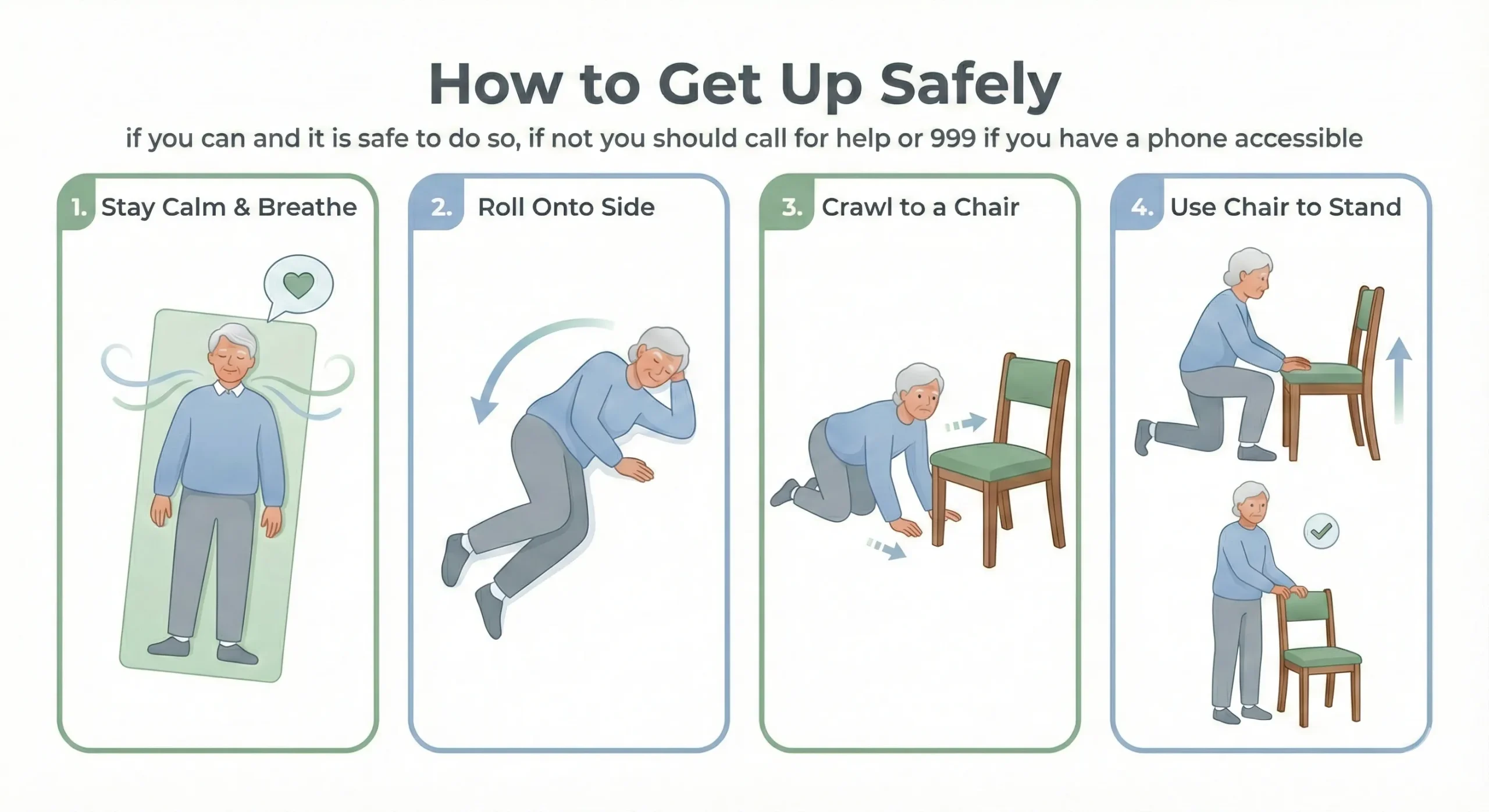
- Stay Calm: If you fall, try to stay calm.
- Check for Injury: Take a couple of minutes to check for any pain or injuries and see if you think you can get up.
- If you can get up: Take your time – do not get up too quickly. Roll onto your side, push yourself onto your hands and knees, crawl to something stable to hold (like a heavy piece of furniture), and stand up slowly.
- If you cannot get up: Call 999 if necessary. If you are worried you may not be able to get up, consider purchasing an Aid-Call or personal alarm (telecare) that connects to a response centre.
When to Call Emergency Services (999)
- Call 999 if: You or someone else has fallen and may have injured the head, back, neck, or hip, or if the person cannot get up.
- Keep Warm: If someone else has fallen and cannot be lifted safely, keep them comfortable and warm while waiting for help.
Resources and Further Reading
- Age UK Advice Line: 0800 678 1602 (open 8am–7pm, 365 days a year). Visit Age UK Falls Prevention.
- Chartered Society of Physiotherapy (CSP): Provides the guide “Get up and go – a guide to staying steady”.
- RoSPA (Royal Society for the Prevention of Accidents): Offers advice on making the home a safer environment.
- NHS Website: Central resource for advice on falls prevention.
- Government Publications: Falls: applying All Our Health.